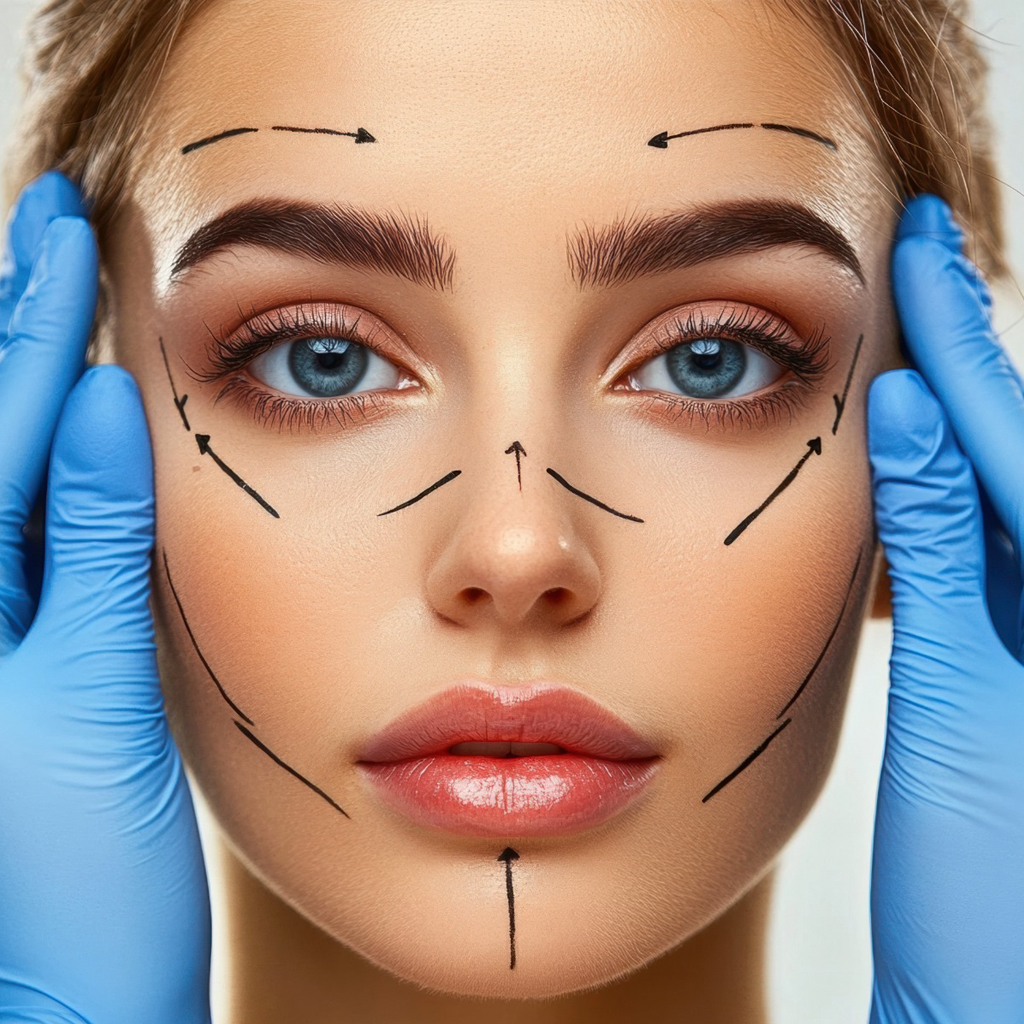


Lower Eyelid Lift (Lower-Lid Blepharoplasty)
A lower-lid lift treats under-eye bags, fine lines, and the often bothersome lid–cheek groove (tear trough). Unlike older approaches, the focus is not radical fat removal but contour-oriented redistribution: a smooth, continuous transition that replaces “tired” with calm and clarity. Planning is based on a differentiated analysis of fat, skin, muscle tone and lid-margin stability. If there is lateral canthal laxity, we add a canthopexy to support the lid.
Surgical approaches
Transconjunctival (inside the lid, no external scar): ideal when fat prolapse is the main issue and skin quality is adequate. Fat is repositioned downward/forward to fill the tear trough and smooth the midface—not removed indiscriminately.
Subciliary (just under the lashes): chosen when there is relevant skin excess or mild muscular laxity. A fine skin–muscle flap is elevated; fat compartments are redistributed or conservatively reduced; excess skin is resected in tenths of a millimetre. We deliberately avoid over-tightening to minimise ectropion risk.
Surgery Duration
45-60 minutes
Anesthesia
Local anesthesia or short-term general anesthesia
Pain
Very mild
Scars
Inside, invisible from the outside (tranconjunctival)
Socially Presentable
After 4-5 days
Durability
10-15 years
Hospital Stay
Outpatient (local) or 1 night hospitalization (general anesthesia)
Healing & Aftercare
Eye drops and antibiotic eye pomade for a few days
Fully Recovered After
2 - 8 days
Visible Results
Within 8-21 days, after the swelling subsides
Sports
After 1 week
Duration of Stay in Istanbul
1+4 days
Anaesthesia & duration
Anaesthesia depends on findings and comfort: transconjunctival cases often work well with local anaesthesia plus twilight sedation; subciliary or combined procedures usually with sedation or general anaesthesia. Pure operating time is typically 60–120 minutes. Procedures are usually outpatient with professional aftercare.
Aftercare
Principles mirror upper-lid care: gentle cooling, head elevation, no rubbing or pressure on the fresh incision, consistent drops and ointments.
- Transconjunctival: no external sutures.
- Subciliary: fine stitches are usually removed in week one.
Expect swelling and mild bruising that migrate downward and fade. Indoor light and cameras are more forgiving than daylight; camouflage can be used early after review. Avoid sports and sauna for 2–4 weeks, swimming a bit longer; sun protection is mandatory.
Results & risks
Results develop step by step. Once swelling subsides, the lid–cheek transition appears smoother; the expression looks more rested and less puffy. Scars are favourable: none externally with the transconjunctival route; with subciliary, a barely visible fine line along the lashes. With responsible technique, complications are uncommon, but may include temporary conjunctival irritation, prolonged swelling, minor asymmetries, or—very rarely—lid traction. Prevention: minimally invasive dissection, conservative skin resection, lateral canthal support, and close follow-up.
Sensible combinations
For a harmonious overall look, lower-lid correction can be combined thoughtfully: CO₂ or Er:YAG resurfacing for fine crêpe lines, autologous fat micro-grafting to refine midface fullness, and a simultaneous upper-lid update to balance the upper and lower eye areas. Each step should follow your anatomy—so the result looks natural, not “done.”