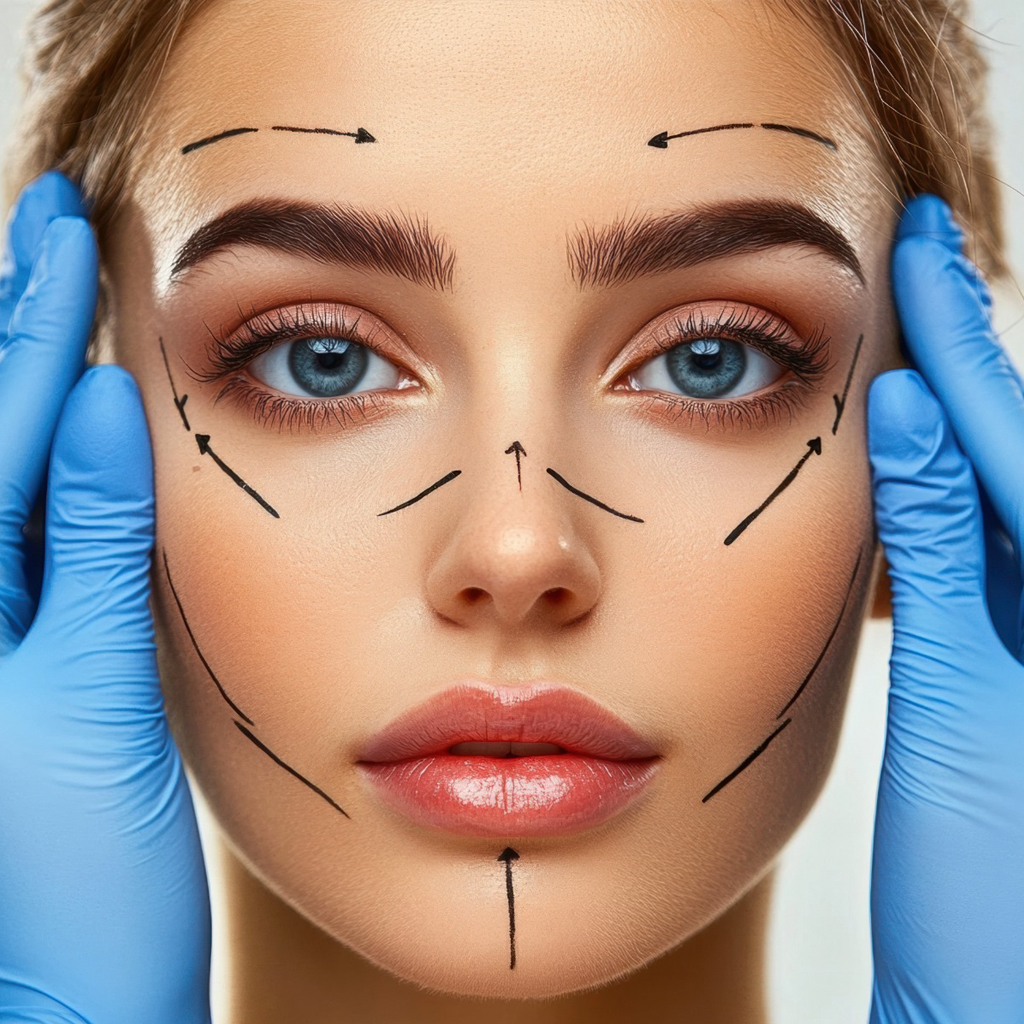



Chin & Jawline Contouring in Istanbul – Definition without Surgery
Overview & Goals
A defined chin tip and a clean jawline frame the face and add tension to the profile. With minimally-invasive techniques we can enhance profile balance, sharpen the chin–neck transition, and smooth the jawline—without surgery and with short downtime. The approach is natural: shape over size, movement over rigid edges.
Assessment – what we look at
We analyze chin projection in profile, the mentolabial fold, the mandibular angle, skin quality, and the influence of fat pads and muscles (masseter, platysma). Feminine faces usually benefit from softer transitions; masculine faces from slightly crisper lines. Dental bite/occlusion and neck posture are part of the plan.
Techniques – combined as needed
Hyaluronic Acid (HA) Filler
Structured, higher-cohesivity gels define the chin tip/base and the jawline.
Pros: reversible (hyaluronidase), millimetre-precise, immediate effect.
Great for asymmetries, profile harmonization, and clean edges—used in moderate amounts.
Autologous Fat (Fat Grafting)
Best for broader deflation or if you want an autologous, longer-lasting solution. Provides a soft feel and may improve skin quality. Less precise than HA for razor-sharp edges and not easily dissolved.
Muscular modulation (Botulinum toxin)
If the masseter muscle is hypertrophic, reducing its activity slims the lower face (“facial slimming”). Treating platysma bands can lessen downward pull and calm the jawline. Effects build gradually and look especially natural when combined with contour fillers.
Fat management
When a small submental pocket is the issue, a focused liposuction (or, in selected cases, deoxycholic acid) can sharpen the cervico-mental angle. This is not weight loss—purely line definition. Selection is strictly indication-based.
Longevity & Aftercare
- HA: typically 9–15 months at chin/jawline
- Autologous fat: potentially long-term (individual)
- Botulinum toxin: 4–6 months (often longer at the masseter)
After treatment: cool for 24–48 h, avoid exercise/heat and pressure, sleep on your back, reduce heavy chewing briefly. A review at 2–4 weeks allows fine-tuning.
Safety & Risks – transparent
Common: swelling, bruising, pressure, temporary asymmetry.
Rare: vascular compression/occlusion with fillers (we maintain an emergency hyaluronidase protocol), migration with overfilling, nodules or fat necrosis with fat grafting, chewing fatigue with masseter therapy. High-risk areas are treated anatomically, with cannulas, low injection pressures, and conservative volumes. Pregnancy/breastfeeding, active infections, or unclear medical conditions are exclusions.
Limits & Alternatives
Marked skin laxity, substantial fat pads, or skeletal discrepancies (e.g., markedly retruded chin) limit non-surgical options. In those cases, genioplasty, more extensive neck/chin liposuction, or a facelift may be superior. We’ll advise candidly when minimally invasive methods won’t achieve the goal.